


The way traders interact with financial markets has changed significantly with the growth of online trading platforms. In the past, many market participants focused primarily on a single asset class, such as currency pairs in the forex market. Today, more traders are looking for broader access to different financial instruments within a single trading environment.
A modern trading approach often involves monitoring multiple markets, comparing price movements across asset classes, and using different analytical tools to evaluate market conditions. As a result, multi-asset brokers have become increasingly relevant for traders who want more flexibility in how they approach the markets.
When choosing a trading provider, traders typically consider more than the number of available markets. Factors such as platform technology, trading conditions, transparency, account specifications, and customer support also influence the overall experience.
A multi-asset broker provides access to different financial markets through one trading environment, allowing users to explore instruments such as forex, metals, commodities, indices, and CFD markets. MetaGold offers a multi-market trading environment designed for users who want to interact with different asset classes from a single platform.
What Is a Multi Asset Broker?
A multi asset broker is a trading provider that allows users to access various financial instruments through one account and trading platform. Instead of using separate platforms for different markets, traders can manage exposure across multiple asset classes within a unified environment.
The concept of multi-asset trading has become increasingly relevant as traders seek more flexibility in how they analyze markets. Different asset classes can respond differently to economic developments, market sentiment, and global events, making access to multiple instruments an important consideration for some traders.
Common markets offered through multi-asset trading platforms include:
-
Forex: Currency pairs from major and international economies.
-
Metals: Instruments such as gold and silver, which are often monitored by traders due to their relationship with global economic conditions.
-
Commodities: Markets including energy products and other raw materials.
-
Indices: Instruments that track the performance of groups of companies within specific markets.
-
Crypto instruments: Digital asset CFDs that allow traders to analyze price movements without directly owning the underlying assets.
A multi asset broker does not remove market risk or guarantee trading outcomes. Instead, it provides access to different markets and tools that traders can evaluate based on their own strategies and risk management approach.
What Traders Expect From a Multi Asset Broker
Access to multiple markets is one of the main reasons traders consider multi-asset platforms. However, the quality of the trading environment depends on more than the number of available instruments.
Traders often evaluate how a broker provides access to different markets and whether the available conditions match their trading requirements.
Forex Markets
Forex remains one of the most actively followed financial markets worldwide. Currency trading involves analyzing the relationship between different economies, interest rates, inflation data, and global market conditions.
A forex broker with multiple assets may provide access to major currency pairs as well as other currency instruments. This allows traders to monitor different currency markets and evaluate opportunities based on economic developments and market analysis.
Metals Trading
Precious metals such as gold and silver are widely followed markets among traders. These instruments can attract attention during periods of changing economic expectations, currency movements, or shifts in market sentiment.
Access to metals alongside forex markets allows traders to analyze different asset classes within the same trading environment rather than switching between separate platforms.
Commodities
Commodity markets include instruments connected to global resources and raw materials. Energy products and other commodities are influenced by factors such as supply and demand conditions, economic activity, and geopolitical developments.
For traders interested in broader market analysis, commodity access can provide another area to study alongside traditional forex instruments.
Indices
Indices represent groups of companies or specific market segments. They are often used by traders who want exposure to broader equity market movements rather than individual company shares.
Through a multi asset trading environment, traders can analyze index movements alongside currencies, metals, and commodities to build a wider view of market conditions.
Crypto Instruments
Crypto CFDs allow traders to participate in digital asset price movements through a trading platform without directly holding the underlying cryptocurrency.
As with other CFD instruments, traders should understand the specific characteristics, costs, and risks associated with these products before using them.
|
Market Type |
Examples of Instruments |
Factors Traders May Consider |
|
Forex |
Major and international currency pairs |
Economic data, interest rates, currency movements |
|
Metals |
Gold, silver, precious metals |
Market sentiment, economic conditions, price trends |
|
Commodities |
Energy and raw materials |
Supply, demand, global events |
|
Indices |
Global market indices |
Broader equity market movements |
|
Crypto CFDs |
Digital asset instruments |
Market volatility and instrument conditions |
Why Access to Multiple Markets Matters for Traders
One of the main advantages of multi-asset trading is flexibility. Instead of focusing on a single market, traders can analyze different asset classes and decide which instruments fit their individual approach.
Access to multiple markets can provide several benefits:
Broader Market Analysis
Different markets respond to different economic factors. Currency markets may react strongly to central bank decisions, while commodities can be influenced by supply conditions and global demand.
Having access to multiple instruments allows traders to study relationships between different markets and develop a broader understanding of market movements.
Flexible Trading Approaches
Different trading styles may require different types of instruments. Some traders focus on short-term price movements, while others analyze longer-term market trends.
Managing Market Exposure
Access to multiple asset classes can allow traders to evaluate how their exposure is distributed across different markets. However, diversification does not eliminate risk, and each instrument carries its own characteristics and potential challenges.
Understanding the differences between markets remains essential when using a multi-asset approach.
How to Choose the Right Multi Asset Broker
Selecting a multi asset broker requires reviewing several aspects beyond the number of available instruments. A broader market offering is only useful when supported by clear conditions, reliable technology, and accessible information.
Before choosing a broker, traders may consider:
Available Markets
Review which instruments are available and whether they match the markets a trader wants to analyze.
Trading Conditions
Compare spreads, swaps, commissions, and account specifications to understand the overall cost structure.
Platform Technology
Evaluate whether the platform provides the tools required for analysis, order management, and account access.
Company Transparency
Review official company information, service details, and policies to better understand the provider.
Customer Support
Consider available communication channels and the quality of assistance provided for account-related questions.
Funding Methods
Review available deposit and withdrawal methods, along with related terms and conditions.
Comparing Trading Conditions Across Different Assets
While market access is an important factor, traders should also examine the trading conditions associated with each instrument. Different assets may have different costs, specifications, and trading requirements.
A professional evaluation of a broker should include factors such as spreads, swaps, commissions, and account types.
Spread
The spread represents the difference between the bid and ask price of an instrument. It is one of the factors that can affect trading costs, especially for strategies involving frequent transactions. Spreads can vary depending on the instrument, market conditions, and account type. Traders should review available spread information before selecting instruments for their trading approach.
Swap
Swap refers to the cost or adjustment that may apply when holding certain positions overnight. These conditions can differ between instruments and account types. traders who hold positions for longer periods should understand how overnight costs may affect their trading calculations.
Commission
Some account types or instruments may involve commissions as part of the trading cost structure. Understanding whether an account includes commissions, spreads, or other fees helps traders compare different options more effectively.
Account Type
Brokers may offer different account structures based on trading preferences, available instruments, and specific trading conditions. Factors such as spreads, swaps, commissions, and account specifications can influence the overall trading experience, making it important for traders to review these details before selecting an account type.
MetaGold provides detailed information about its trading conditions, including available spreads and related specifications, allowing traders to review the costs and conditions associated with different instruments. Traders can explore MetaGold trading conditions to better understand the available trading environment and compare the information before making their own decisions.
MetaGold’s Multi Asset Trading Environment
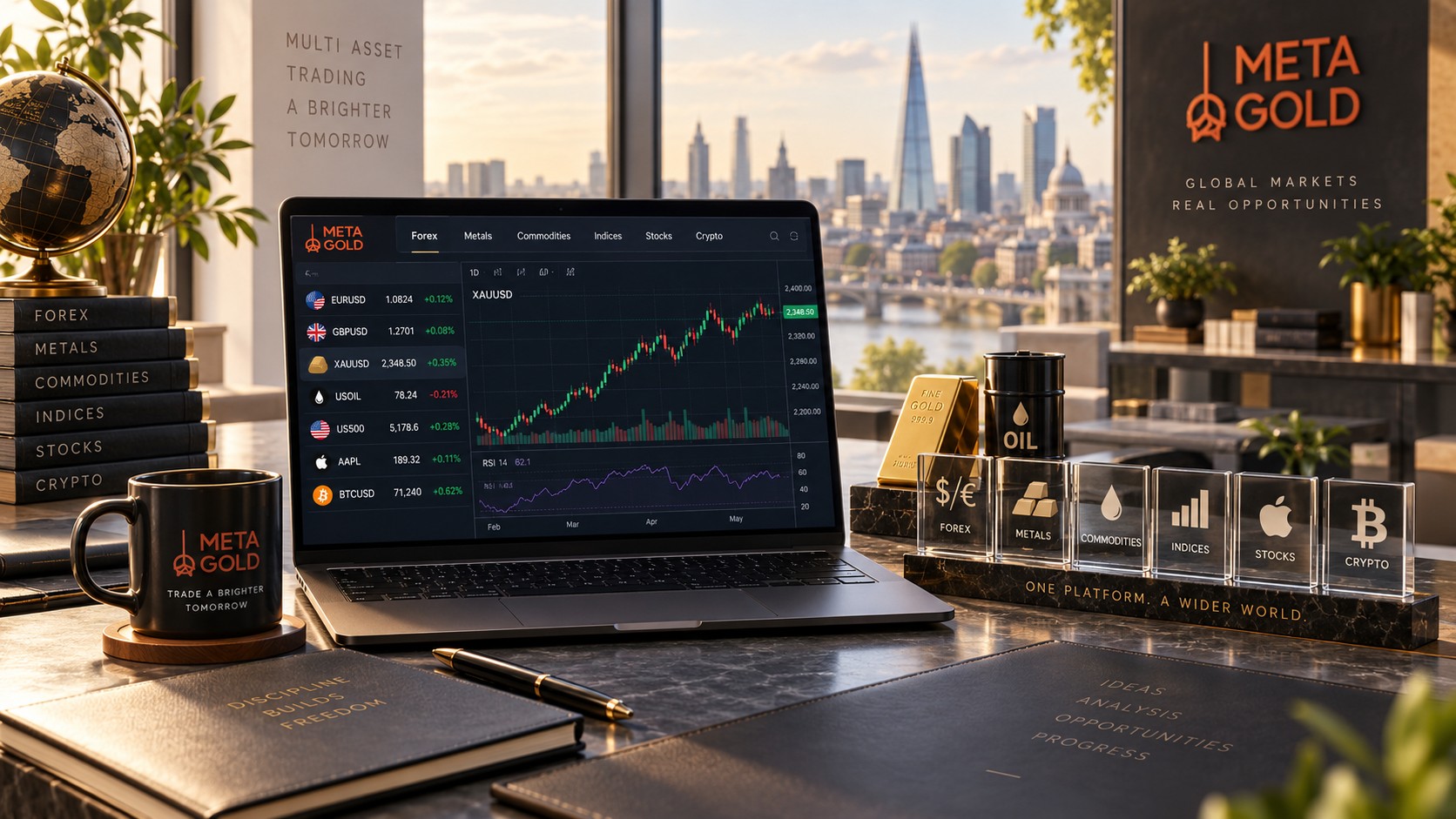
For traders who want more than just access to a few markets, MetaGold offers a trading environment built for flexibility, convenience, and multi-market opportunity. Instead of limiting users to a narrow selection of instruments, MetaGold gives traders access to a range of forex and CFD markets, including forex pairs, metals, commodities, indices, and crypto instruments within a single platform structure.
This matters because modern traders often need the ability to move between markets, compare opportunities, and respond to changing conditions without switching between different systems. MetaGold multi asset broker supports this approach by providing access to MetaTrader 5, one of the most recognized trading platforms in the market. Through MT5, traders can use advanced charting tools, technical indicators, multiple order types, and Expert Advisors within a structured platform designed to support active and informed decision-making.
What makes MetaGold especially attractive is the way it combines market variety, platform technology, and a structured trading environment. For traders looking for a broker that supports both analysis and execution across different markets, MetaGold presents a practical and well-rounded option.
Rather than forcing traders into a one-market setup, MetaGold gives them the freedom to explore different asset classes and build a trading approach that suits their goals. For users who value accessibility, flexibility, and a broader market perspective, that can make a real difference.
Conclusion
Multi asset brokers have become increasingly relevant as traders look for broader access to financial markets through a single trading environment. The ability to analyze forex, metals, commodities, indices, and CFD instruments from one platform can provide greater flexibility for traders who want to explore different markets.
Traders should consider factors such as available instruments, trading conditions, platform technology, transparency, and customer support rather than focusing only on the number of markets offered.
MetaGold provides a multi-market trading environment for users interested in forex and CFD markets, combining access to different instruments with trading technology and transparent information. By understanding available tools and conditions, traders can make more informed decisions about the platforms they choose to use.
